
The addition of a patio has become a more integral part of the house, they are no longer deserted concrete slabs sitting in the back yard.
Depending on the state of the concrete and individual preferences there are plenty options possible for transforming existing concrete pads, existing concrete can be stained, given a textured coating or a stenciled tile pattern applied.
Traditional ceramic tiles are available in a multitude of colors and styles and are always an option provided the surface is not cracked in any way.
When planning your outdoor living area remember to include electrical outlets for portable appliances such as barbecues, or musical equipment; lighting for nighttime entertaining and you might also want to include step savers such as a portable phone or a intercom system.
Beautiful Home Patio Area
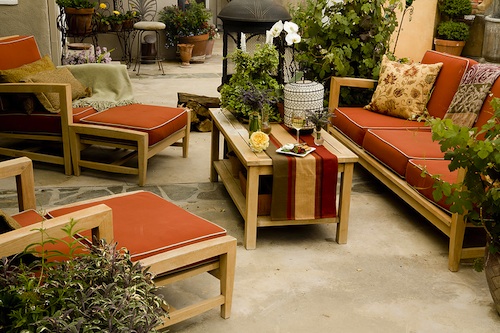
Spice Up Your Patio
- This outdoor seating area is an increasingly popular area that families use to relax and enjoy the outdoors, that old, dull and maybe cracked concrete pad is most likely in desperate need of a bold makeover. Whether your patio is open or enclosed, comfortable outdoor patio furniture surrounded by hanging and potted plants create a peaceful setting the entire family can enjoy.
- A big consideration should be privacy. An outdoor privacy screen, or landscaping ideas such as, brick walls, high growing shrubs and fencing, are all ideal, and can be designed attractively to add to the decorative feel of the patio.
- If you are planning to use a paved or tiled floor, a great idea to create an unusual effect is to leave planter spaces that can be filled with flowering plants, greenery and shrubs.
- You may also consider adding a fish pond, water garden, or for those of us with a green thumb you might try your hand at a miniature Japanese garden.
Patio furniture should be durable, easy to clean and easy to store in winter. Accent colors in cushions, tablecloths, umbrellas, and other accessories can be a huge addition.
A lanai patio cover is one of the most effective answers to the outdoor living problem. It's roof gives protection from too much sun or rain, but with its sides open it preserves all the advantages of outdoor entertaining.
It really doesn't matter the size any porch, patio, terrace or small yard, can be transformed, with minimum work and little cost. Willing hands and a little imagination is all you need to get this project started.


